
Tree rules in Florida are layered. The city sets its own code, the county sets another for unincorporated land, and a state statute sits on top of both for certain residential trees. Lakes add another layer. None of this is complicated once you know which layer you are standing in. The information below reflects the code text as we read it in fall 2026. Rules change, so confirm with the city or county before you cut, and we do the same on every estimate.
Winter Haven Tree Removal Permit Rules in the City Code
Inside city limits, tree protection lives in the Unified Land Development Code, Chapter 21, Article III, Division 7, Sections 21-181 through 21-188. The city rewrote this division with Ordinance O-24-40, adopted September 23, 2024. Its stated purpose is to protect the urban forest, encourage species diversity and expand canopy cover.
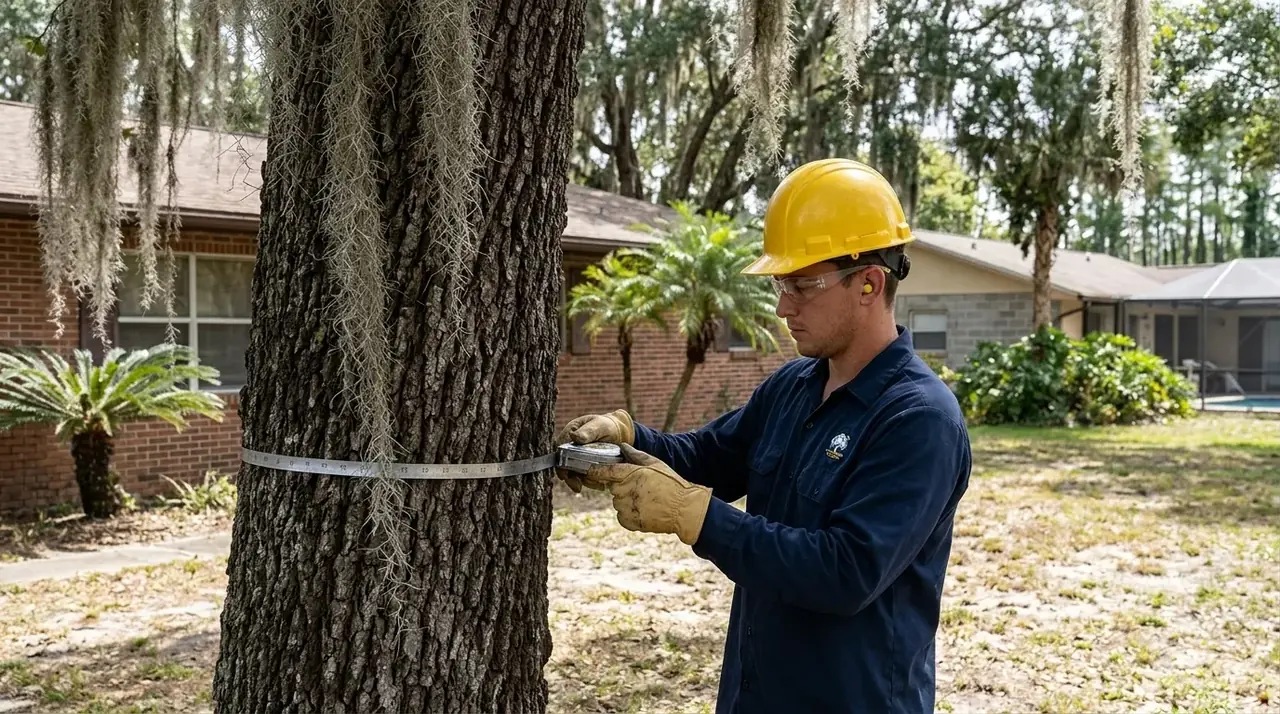
The code sorts trees into a few groups by trunk diameter measured 4.5 feet above the ground (DBH):
| Category in the city code | How it is defined |
|---|---|
| Protected tree | 6 to 23 inches DBH, not a prohibited or FISC-listed invasive species; single-trunk palms with at least 8 ft of clear trunk also count |
| Specimen tree | 24 inches DBH and up, not a prohibited or invasive species |
| Heritage oak | A live oak 34 inches DBH or greater and in good health |
| Prohibited tree | Species listed in the code table; not protected and no approval or mitigation needed |
Where the rules apply, Section 21-184 requires a tree removal permit from the City Manager or a designee before removing a covered tree.
Single-Family Homes and the Winter Haven Tree Code
Here is the part most homeowners care about. Section 21-183(b) lists exemptions from all of the tree requirements in Sections 21-182 through 21-188. The first one is single-family detached and duplex residential land uses. If you own a house or a duplex inside the city, the division's permit, mitigation and replacement rules do not apply to your lot.
The other exemptions in the same section cover:
- Removing trees to maintain existing utility lines or build new public utility facilities.
- Removing or relocating containerized and nursery stock trees.
- Removing dead, diseased or naturally fallen trees.
- Removing any species on the current Florida Invasive Species Council (FISC) invasive plant list, such as camphor or Chinese tallow.
- Tree work on public property done by public employees or contractors.
Tree Removal Permits for Winter Haven Businesses and New Development
Commercial, multi-family and subdivision sites are where the code has teeth. Before a building permit is issued, Section 21-185 requires a tree mitigation and removal plan showing every tree over 6 inches DBH, which will stay and which will go, plus protection fencing and replacement math. During construction, protected trees get a fenced zone at least 10 feet from the trunk, specimen trees 15 feet, and heritage oaks the dripline or 20 feet, whichever is less.
Replacement is based on the inches removed: 1:1 for protected trees, 1.5:1 for specimen trees and 2:1 for heritage oaks, with credits for trees that are preserved. Replacement trees must be Florida Grade A, at least 3 caliper inches and 10 feet tall. Section 21-186 sets the penalty for removing a covered tree without a permit at $200 per inch of DBH, or $400 per inch for a heritage oak, plus replacement at double the normal ratio. Those numbers add up fast on a commercial lot, so it pays to plan before clearing. Our land clearing crews work from the approved plan, not from guesswork.
Polk County Tree Removal Rules Outside City Limits
Many addresses with a Winter Haven mailing label are not in the city. Cypress Gardens, Inwood, Wahneta and Jan Phyl Village are census-designated places in unincorporated Polk County, and parts of the Eloise area sit outside the city line as well. Those properties follow the Polk County Land Development Code rather than the city's Chapter 21.
The county's main tree and landscaping section, Section 720, states that it applies to new development in unincorporated Polk County, plus certain expansions of multi-family and non-residential sites. Section 721 gives credits for existing trees kept during development. We did not find a county provision requiring a permit for a homeowner to remove a yard tree on an existing single-family lot, but wetlands, protected habitat, recorded conservation areas and shorelines are separate matters. If you live in Cypress Gardens or Wahneta, we will check the county side for your parcel before we schedule.
Florida Statute 163.045 and Dangerous Tree Removal
Florida Statute 163.045 took effect in 2019 (Chapter 2019-155, Laws of Florida) and was amended in 2022 (Chapter 2022-121, from Senate Bill 518). In its current form, a local government may not require a notice, application, approval, permit, fee or mitigation to prune, trim or remove a tree on residential property when the owner has documentation that the tree poses an unacceptable risk to persons or property. The statute also bars a local government from requiring replanting of a tree removed under it.
The 2022 amendment tightened the details:
- "Documentation" means an onsite assessment done under the ISA tree risk procedures in Best Management Practices, Tree Risk Assessment, Second Edition (2017), signed by an ISA Certified Arborist or a Florida-licensed landscape architect.
- A tree poses an unacceptable risk when removal is the only practical way to reduce its risk below moderate under those same procedures.
- "Residential property" means a detached single-family building on a lot actively used for single-family purposes, as a conforming or legally nonconforming use.
- The section does not apply to delegated mangrove protection authority.
Inside Winter Haven, a single-family lot is already exempt from the city's tree division, so the statute matters more in other jurisdictions, for HOA disputes, and as a record if anyone questions the removal later. We are not ISA certified ourselves, but we can arrange a written assessment from an ISA Certified Arborist when you want that paperwork. Our tree risk assessment page explains how that works.
Tree Removal Near Winter Haven Lakes and Shorelines
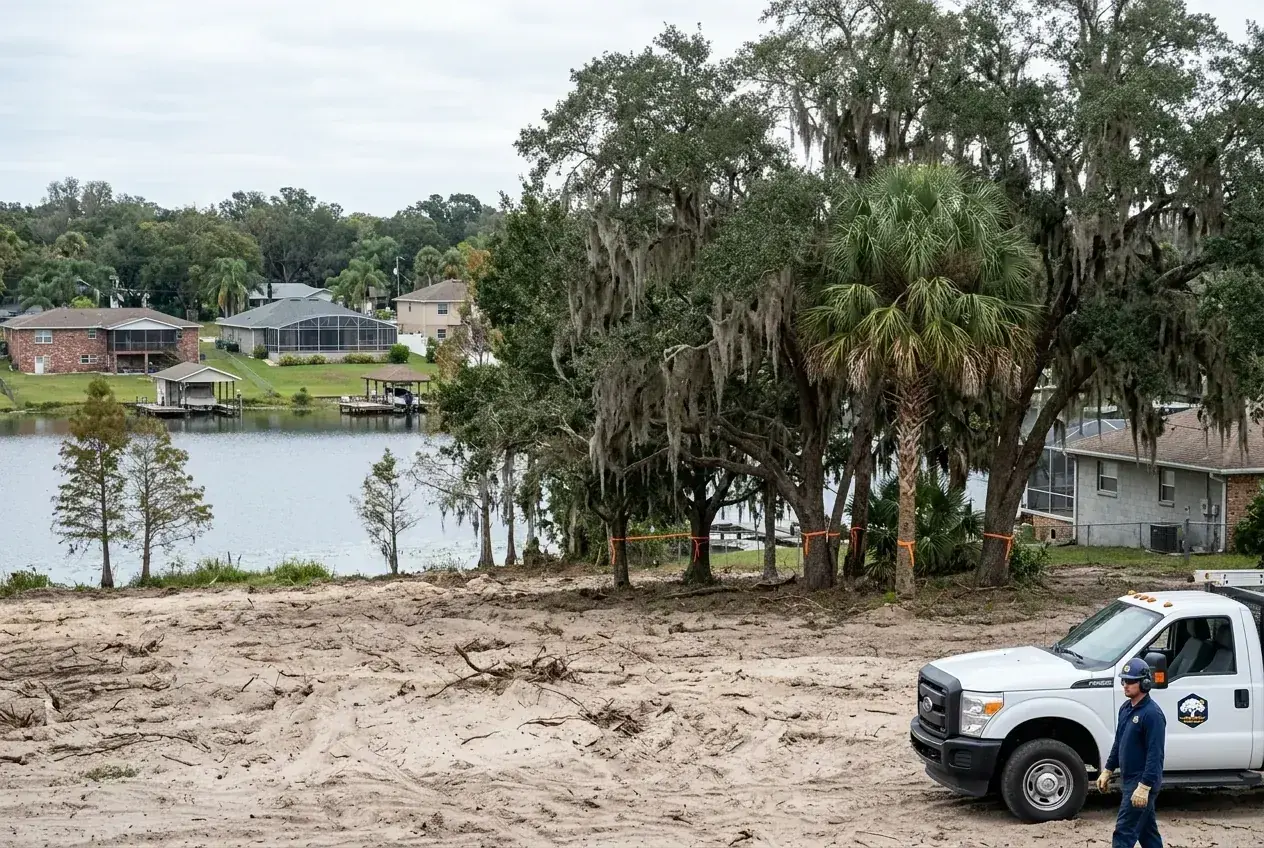
Lakefront owners have one more layer. The city's Lakeshore Protection rules in Article V, Division 3 (Sections 21-291 to 21-296) limit clearing of shoreline vegetation. Under Section 21-293, clearing less than 50 feet or 50 percent of your owned shoreline, whichever is less, does not need a city permit, but clearing more requires all state and federal permits first. State aquatic plant and wetland rules can apply below the water line too. Our article on trees and shorelines on the Winter Haven Chain of Lakes covers those agencies, and our lakefront tree service crews plan around them.
Other Rules That Can Stop a Tree Removal
Even when no government permit applies, check these before anyone climbs:
- Deed restrictions and HOA rules, which can be stricter than the code.
- Utility lines. Trees touching or near energized lines need the utility involved, and only qualified line-clearance crews should work inside that space.
- Recorded conservation easements, which the city's Article V, Division 6 addresses.
- Shared trees on a property line, where it is wise to have your neighbor's agreement in writing.
How We Handle Tree Permits on Winter Haven Jobs
On every estimate we look up whether the address is in the city or the county, note anything near water, and tell you what we found before scheduling. If a permit or plan is required, we say so and point you to the right office. If none is required, we put that in writing on the quote too. Property owners near downtown Winter Haven and other older neighborhoods often ask about heritage oaks, and the answer for a single-family lot is usually reassuring. Ready to talk about a specific tree? Start with our tree removal page and request a free on-site estimate.