
Winter Haven · Polk County, FL
Storm Damage Cleanup for Winter Haven Yards
After a hurricane or a hard tropical storm, we work through the whole yard on a planned schedule: hanging limbs, cracked and leaning trees, downed brush and the debris pile at the curb.
Storm Damage Cleanup in Winter Haven After the Wind Moves On
The day after a hurricane, most yards around the Chain of Lakes look the same: branches everywhere, a few limbs hung up high in the canopy, a pine or two leaning, and leaves plastered against every screen. Nothing is on the roof, but nothing is safe to walk under either. That is the work this service covers. If a tree is actually on the house or a car, call our emergency tree removal line first; storm cleanup is the planned, yard-by-yard work that comes after the urgent calls are handled.
We schedule storm cleanup visits by risk. Hanging limbs over walkways and driveways come first, then cracked or leaning trees that could fall on a structure in the next squall, then the ground debris. You get a written price for the whole scope, so you are not paying hour by hour while the crew picks through a tangle.
Lake homes add another wrinkle, since a lot of owners on the chains spend summers up north and come back in the fall to find the damage. A caretaker or neighbor can let us in to look, and we send photos with the written price so the work can be approved from a distance.
What Storm Cleanup Covers
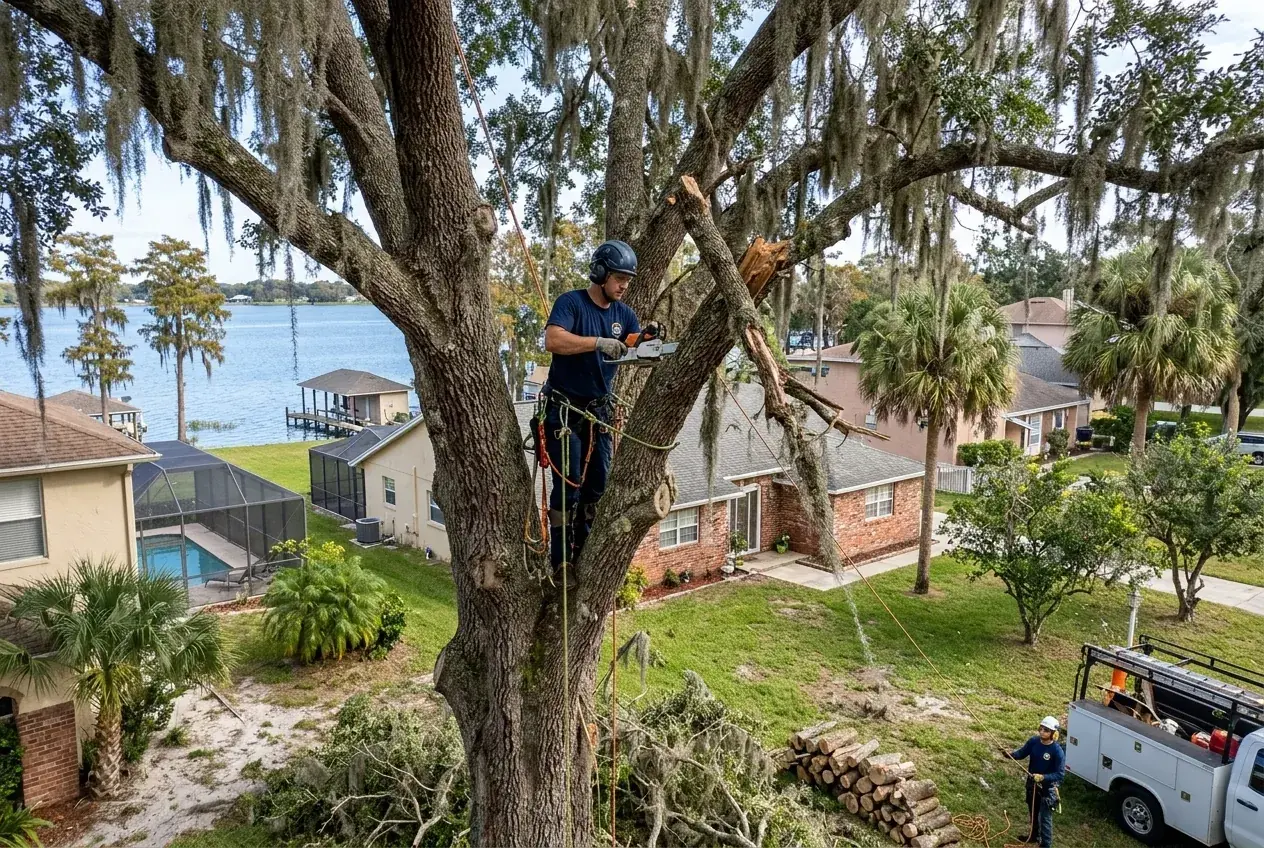
- Removing hangers, the broken limbs caught in the canopy that can drop without warning
- Pruning torn branch stubs back to clean cuts so the tree can seal them
- Assessing and removing trees that are cracked, uprooted or leaning toward a structure
- Cutting up and clearing downed trees and limbs from the yard, pool deck and fence lines
- Chipping brush and hauling it off, or stacking it at the curb to posted pickup rules
- A before-and-after photo set for your insurance file
Storm Damage in Winter Haven: How Recent Hurricanes Hit Local Trees
Polk County has had a rough couple of decades. Charley in 2004 crossed the county and took down old oaks all over the ridge. Irma in 2017 brought long hours of wind across Central Florida. In 2022, Hurricane Ian arrived as a weakened but very wet storm; preliminary National Weather Service figures put Polk's fastest recorded wind around 78 mph in Lakeland, and the rain, close to 17 inches in parts of the county, did as much harm as the wind. Saturated sand let big trees tip out root plate and all, while lakes and canals rose over their banks.
Hurricane Milton followed in October 2024. Forecasters issued a flash flood emergency that included Winter Haven, tornado warnings ran across the county, and power stayed off for days on many streets. Laurel oaks, water oaks and tall pines failed in both storms; most live oaks and sabal palms rode them out. Our post on how Ian and Milton hit Polk County trees goes deeper into which species held up.
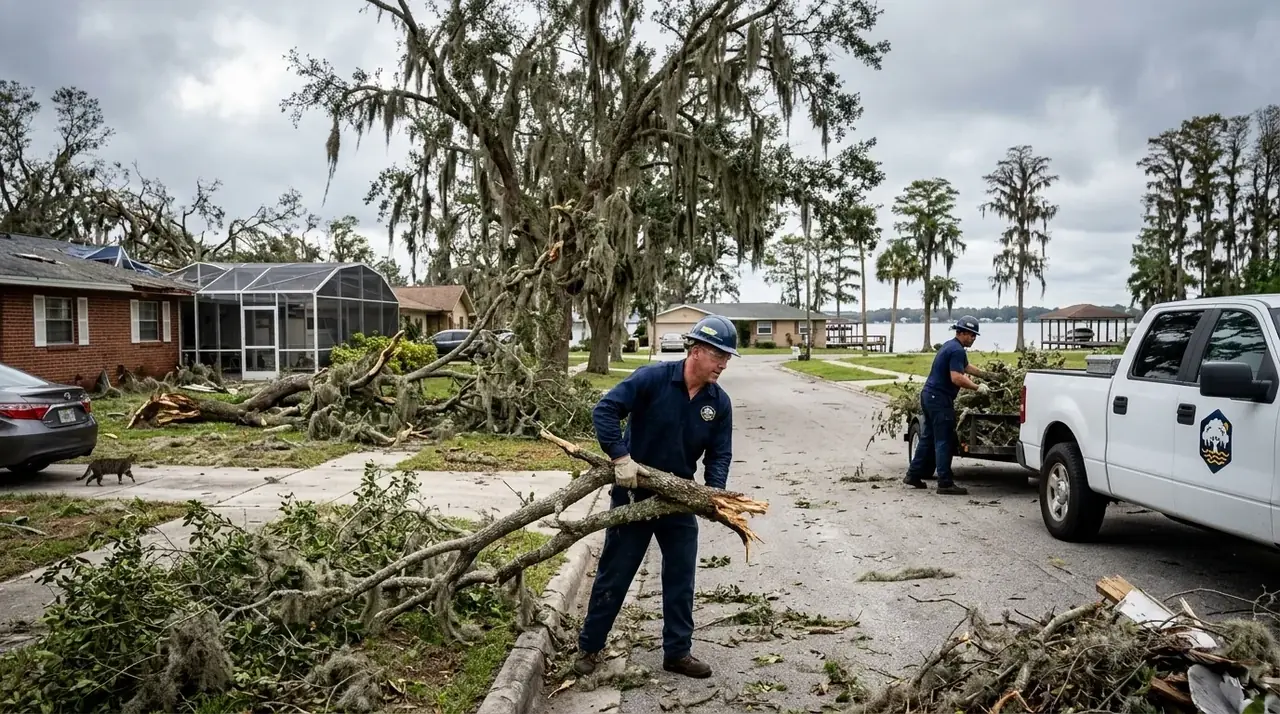
The pattern after storms like these is consistent across Central Florida. Trees with decay at the base, trees already leaning and trees on soggy ground go over first. Limbs that were topped years earlier snap where the weak sprouts attach. Palms stripped by over-trimming lose their heads more often than full-crowned ones. All of it points toward pruning and inspection before the season rather than after.
Storm Damage Tree Cleanup Cost in Winter Haven, FL
Every storm job is different, so we price the scope you can see. Most of the cost comes from how many hangers have to be climbed out, how many trees need to come down, and how much debris goes onto the truck. Ground-level brush is the cheap part; a cracked 60-foot laurel oak over the house is not.
| Job | Typical range | What moves the price |
|---|---|---|
| Yard debris cleanup, limbs already on the ground | $300 – $1,200 | Volume, distance to the street, haul-off vs. curbside stacking |
| Hanging limb removal (per tree) | $250 – $750 | Height of the hanger, what it hangs over, climbing access |
| Storm pruning to repair torn branches | $175 – $900 per tree | Tree size, number of broken leaders |
| Uprooted or leaning tree removal | $850 – $3,600+ | Tree height, root plate size, how close it sits to a structure |
| Lakefront yard storm cleanup | add 10 – 30% | Debris in the shallows, docks and seawalls, hand-carry distance |
Ask about pricing for neighbors, too. When several homes on the same street need cleanup after a storm, we can often schedule them back to back, which saves travel and setup time. Each household still gets its own estimate and its own invoice for insurance.
Storm Cleanup Near the Chain of Lakes: What Is Different
Lake lots get hit harder. Wind runs across open water with nothing to slow it, so shoreline trees catch the full gust. When water levels come up after a big rain, soil along the bank stays soggy for weeks, and trees that looked fine the day after the storm can start leaning a week later. We check root plates on lake lots carefully and look for fresh cracks in the soil on the side away from the lean.
Debris that ends up in the lake or wedged under a dock is its own problem. We pull what we can reach from shore and the dock and keep fresh cuttings out of the water. Leaves and twigs that blew in during the storm are mostly left to the lake, but whole limbs and logs near swimming areas and boat slips are worth getting out. For shoreline trees that need more than cleanup, our lakefront tree service covers working around boathouses, seawalls and cypress.
Documenting Storm Damage for Your Claim
Before cutting anything on a storm job, we take a set of photos: wide shots of the yard, close shots of each broken tree or limb, and whatever the tree hit. After the work, we shoot the same spots again. You get both sets along with an itemized invoice listing each tree, what was done and what it cost. Adjusters juggle a huge number of claims after a big storm, and tidy records tend to move faster than a single total on a page.
When to Hold Off on Storm Work
Not everything has to happen the first week. A leaning tree that is not near a building, a pile of brush at the back of the lot, or a broken limb on a small tree can wait until the crews are less stretched and prices settle. We would also hold off removing a damaged live oak until it has a chance to push new growth; many lose a big share of their leaves and come back. Let us prune the broken parts and judge it again in a few months.
The same goes for big pines that lost a few branches but kept a green crown. A storm-stressed pine is worth watching for bark beetles over the next couple of months, but many recover with no work at all.
Storm Cleanup Timeline
In the first days after a major storm, we work emergency calls only. Planned cleanups start as soon as roads open and power crews have cleared the main lines, usually within the first week or two. A typical yard takes a half day to a full day. Larger lots with several trees down may take two visits: one to remove hazards and cut up trees, and a second for grinding and final raking.
Hurricane Tree Cleanup Across Winter Haven Neighborhoods
We clean up after storms throughout Winter Haven, from the cypress-lined lakes in Cypress Gardens to homes along Lake Eloise in Eloise and older oak-shaded blocks downtown near Lake Silver. If you are replanting after the storm, our guide to the best shade trees for Winter Haven yards favors species that stand up to wind. When you are ready for a cleanup price, request your estimate here.
Questions
Winter Haven Storm Damage Cleanup: Common Questions
Emergency removal is about one urgent problem, usually a tree on a roof, a car or a driveway, handled right away, day or night. Storm cleanup is the planned work across the whole yard after a hurricane or tropical storm: hanging limbs, leaning trees, broken branches and the debris pile. It is scheduled, priced up front and billed at normal rates.
A hanger is a broken branch that snapped during the storm but got caught in the canopy instead of falling. It can sit there for days and then drop in a light breeze, often onto a walkway, lanai or driveway. Hangers are the main reason we tell people to stay out of a storm-damaged yard. Keep everyone out from under them until a climber removes them.
Free curbside pickup can save money, but after a big storm the trucks can take weeks to reach every street, and piles must meet the posted rules. If you can live with the pile at the curb for a while, we will stack it properly. If you want it gone, or the pile would block a sidewalk or drainage, our crew hauls it off the same day.
Not necessarily. Oaks often shed many leaves in high wind and push out new growth within weeks to a couple of months. Look at the structure instead: broken leaders, split trunks, and roots lifted out of the ground matter more than missing leaves. We usually prune the broken parts now and judge the overall health again once new growth appears.
Coverage varies. Many policies help pay to remove trees that hit an insured structure or block access, while general yard debris is often limited or excluded. We provide a before-and-after photo set and an itemized invoice that separates tree removal from debris cleanup, which makes it easier for your adjuster to sort what is covered. Check your own policy details.
Right after a major storm we focus on emergency calls, trees on occupied homes and blocked access. Planned cleanups usually start once roads are open and the utilities have cleared the main lines, often within the first week or two. Call early to get on the list; we schedule by risk and by location so crews are not crossing the county back and forth.
Small trees can sometimes be pulled upright and staked if the roots were not badly torn. Large trees that lean because the root plate lifted are a different story; once a big oak's roots break, the tree rarely regains its anchorage. We look at the soil around the base, the direction of the lean and what it could hit, then give you a straight recommendation.
We pull branches we can reach safely from the shoreline and the dock, and we take care not to add fresh cuttings to the water during cleanup. Large logs in deep water or tangled under a boathouse may need a boat or a marine contractor. Before pulling anything from the shallows, we look at what is growing there, since aquatic plants have their own rules.
Yes, it helps. Removing dead wood, thinning dense crowns and shortening long, heavy limbs over the roof reduce the chance of breakage. Avoid topping and avoid stripping palms bare, which both make trees weaker. Late winter through spring is a good time to schedule it, well before the peak of the season in August through October.
Yes. Uprooted trees often leave a tipped root plate instead of a normal stump, and those can be cut back, flattened and ground so the hole can be filled and leveled. We usually do grinding on a second visit once the urgent cleanup is finished. It is priced separately on the estimate so you can decide which stumps are worth grinding.
Related
Other Winter Haven Tree Services
Storm passed, mess stayed?
Photos for the insurance company first, then the hazards, then the cleanup.
Mon–Sat 7:00am–7:00pm (24/7 emergency line for storm work) · Licensed & insured