
Winter Haven · Polk County, FL
Stump Grinding in Winter Haven, FL
Old oak, pine and palm stumps ground below grade so you can mow, plant or lay sod again. We call in utility locates first and work carefully around sprinklers, septic lines and seawalls.
Stump Grinding Winter Haven Homeowners Can Count On
A stump looks harmless until you hit it with the mower for the third time. Left alone, oak and pine stumps take years to rot down, and in the meantime they trip people, block new sod, and can attract termites. Some species, like camphor and Chinese tallow, keep throwing up sprouts from the roots long after the tree is gone. Grinding turns the stump and the top of the root flare into a pile of chips, so the spot can be leveled and planted.
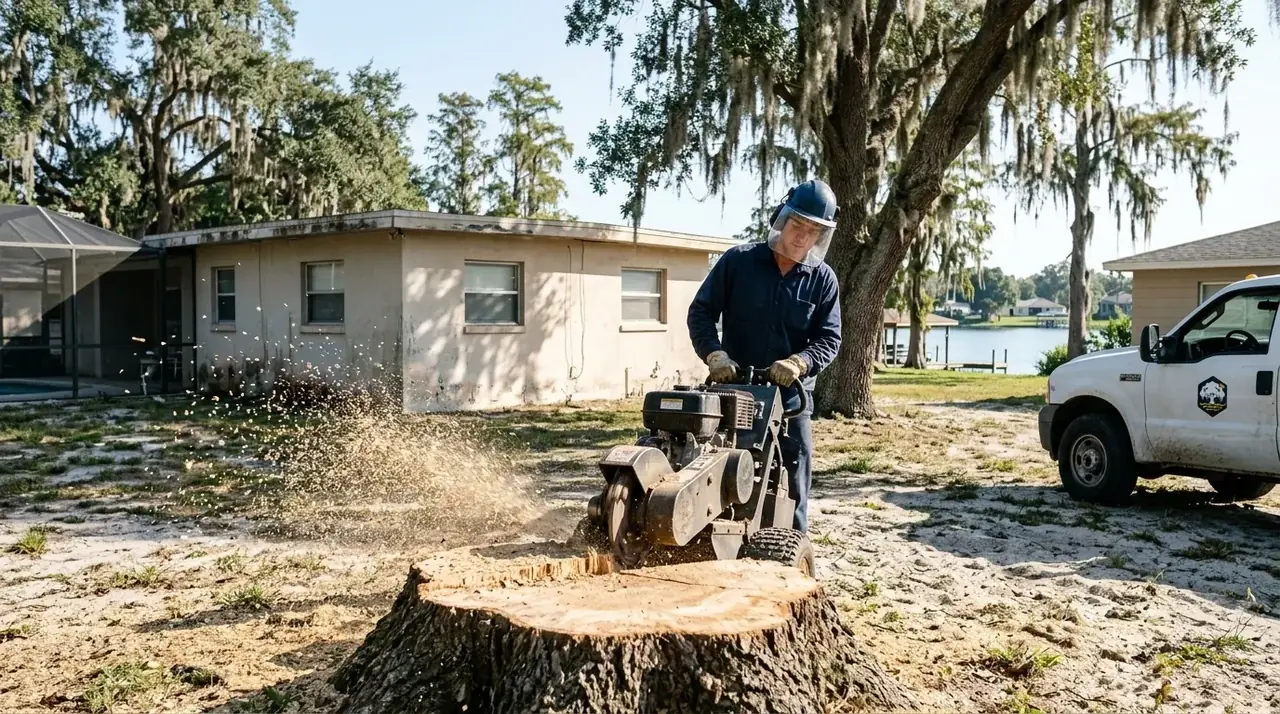
We grind stumps left from our own removals, from other crews, and from trees that fell years ago. A compact grinder fits through most standard yard gates, so backyard stumps behind a pool cage or a fence are usually no problem. You get a price per stump in writing, and the cleanup is part of it.
Stumps also get noticed when a house goes on the market. Buyers and inspectors spot them, and a cluster of old stumps can make a yard look neglected even when everything else is in good shape. Grinding them before listing is one of the cheaper fixes on a pre-sale list.
Grinding is also the quickest way to reclaim a spot for something new. Once the chips are cleared and the ground is filled, the area can take sod, a garden bed, a shed pad or a new tree planted a few feet off center.
What Stump Grinding Includes
- A Sunshine 811 locate ticket placed before we grind, as Florida law requires for digging
- Marking sprinkler heads, valve boxes and shallow lines with you before the grinder starts
- Grinding the stump and main surface roots, typically 6 to 12 inches below grade
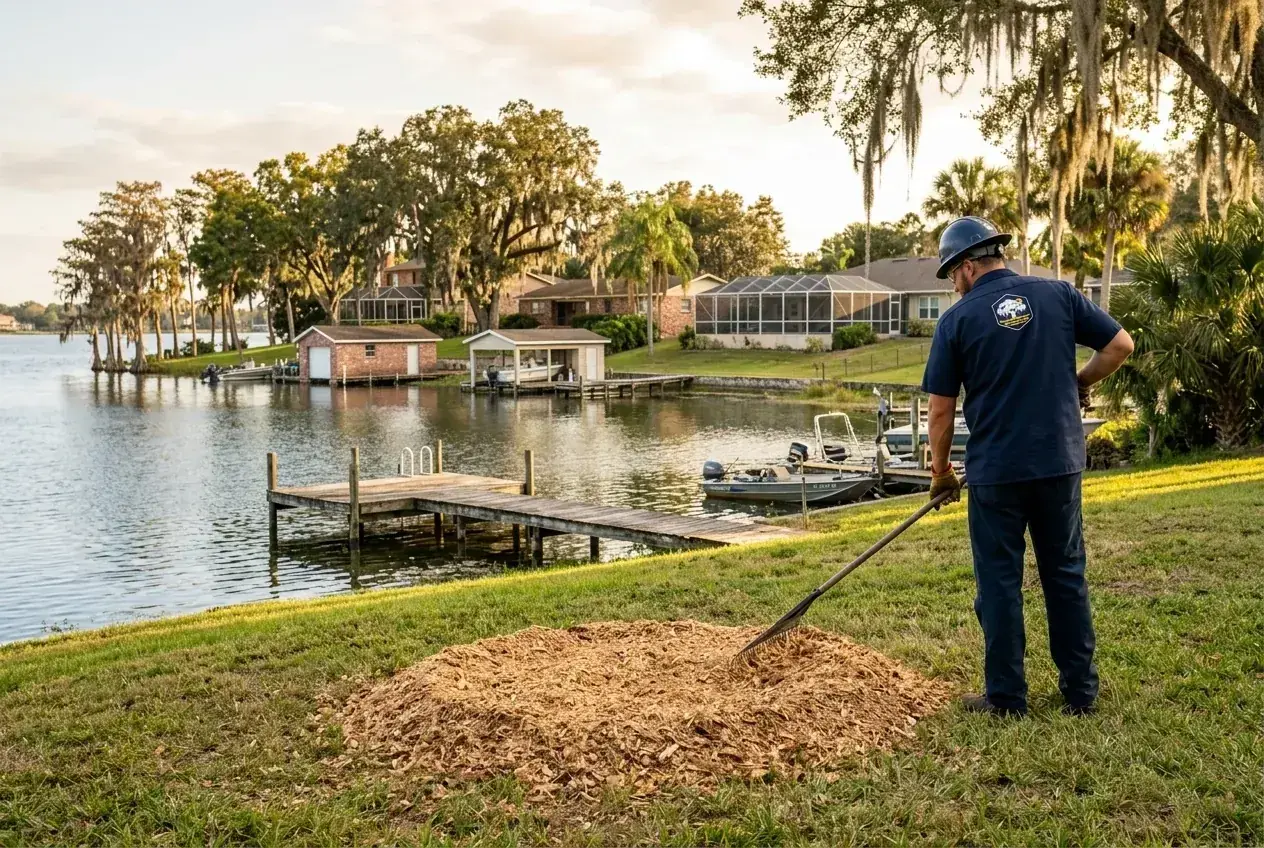
- Raking grindings back into the hole or hauling them off, your choice
- Topsoil fill on request so the spot is ready for sod
- Blowing off driveways, walks and pool decks before we leave
Pets and kids should stay inside while the grinder runs. The cutting wheel throws chips and small stones a surprising distance, so we set up a safe zone around the stump, shield nearby windows and cars when needed, and stop the machine if anyone walks into the area.
Stump Grinding Cost in Winter Haven, FL
Most stumps here cost between $95 and $425 to grind. Size is the main factor, measured across the widest part of the cut. A small citrus or crape myrtle stump is quick. A big live oak stump with roots spread across the yard takes much longer. Access, the number of stumps, and a request to haul the grindings away round out the price.
| Job | Typical range | What moves the price |
|---|---|---|
| Small stump under 12 inches (citrus, crape myrtle) | $95 – $150 | Access, surface roots |
| Medium stump 12 – 24 inches (pine, laurel oak) | $150 – $275 | Wood hardness, root flare width |
| Large stump over 24 inches (live oak, big laurel oak) | $275 – $425 | Diameter, root spread, depth requested |
| Palm stump or Ganoderma-infected palm | $95 – $225 | Trunk width, removing infected material |
| Grindings haul-off and topsoil fill | Quoted per stump | Volume of chips, amount of fill |
Stumps left from older removals sometimes have rocks, wire or concrete grown into them, which chews up grinder teeth. If we spot that during the estimate, it goes on the price so there is no surprise later.
Stump Grinding in Winter Haven Sand, Near Seawalls and Septic Lines
Sandy soil is easy to grind through, but it settles. When you rake grindings back into the hole, they decompose over the next year or two and the spot sinks a bit. For a level lawn, haul off most of the chips and fill with topsoil, or plan on topping it up later. Shallow irrigation lines are the other local issue. Many yards here have sprinkler pipe just a few inches down, so we walk the zone with you and flag heads before the wheel touches dirt.
Septic systems are common in parts of Winter Haven and the unincorporated areas around it. Drain field lines sit close to the surface, and grinding deep over them can crack pipe. If a stump sits over or near the drain field, we grind shallower and keep the machine off the field itself. Our post on tree roots, septic tanks and sewer lines explains why trees and drain fields do not mix.
Lakefront stumps need extra thought. A stump near a seawall may have roots running into the backfill, and grinding too aggressively there can leave voids that let soil wash out. On lake banks without a wall, the old root mass may be part of what is holding the slope in place. In those spots we grind just enough to clear the surface and leave deeper roots to rot slowly. For bigger shoreline jobs, see our lakefront tree service.
Stumps From Old Citrus and Palms
Citrus stumps are small and quick, but old grove trees often sit near buried irrigation risers, so we look for those before grinding. Palm stumps are fibrous rather than woody; they grind differently and can leave stringy material behind. Palms killed by Ganoderma need the most care, since UF/IFAS advises removing as much infected stump and root as possible. We haul those grindings away rather than spreading them as mulch.
Surface Roots Across the Lawn
Big oaks often send surface roots across the lawn well away from the stump. We grind the main roots close to the stump as part of the job and can chase longer surface roots for an added charge. Roots deeper than the grass line usually do no harm and decay on their own over several years.
When Grinding Is Not Worth It
If a stump is at the back of the property in a natural area, it may be fine to leave it to rot. A stump that is actively holding a lake bank together is usually better left alone or only lightly ground. Stumps right against a foundation or pool shell can be ground only so close before the machine risks the structure; in those cases we cut low and treat the rest. We will tell you which category your stump falls in.
If you are planning a driveway, patio or pool where the stump sits, talk with that contractor first. Some will want the stump ground extra deep or the roots pulled so the base under the slab stays stable, and it is easier to plan that up front.
How Long Grinding Takes
We need at least two full business days for the 811 locate before we grind, so most jobs land three to seven days after you approve. The grinding itself is fast. A small stump takes 15 to 30 minutes, a large oak stump an hour or two, and a yard with several stumps usually finishes in a morning. Cleanup happens right after.
When the locate marks show a gas or electric line close to a stump, we adjust on the spot: the grind gets shallower, and a stump right on top of a marked line may be cut flush instead. That call is made with the paint marks in front of us.
Stump Removal Near Florence Villa, Inwood and the Lakes
We grind stumps all over Winter Haven, from older yards in Florence Villa and lots near Lake Cannon in Inwood to homes in Wahneta and lake properties on the north chain. Pulling out leftover grove trees? Our guide on what to do with old citrus trees covers your options. Pair grinding with tree removal for the best price, or request a stump grinding quote on its own.
Questions
Winter Haven Stump Grinding: Common Questions
Most stumps run $95 to $425, depending mainly on diameter. Small citrus and crape myrtle stumps are near the low end, medium pines and laurel oaks fall in the middle, and large live oak stumps are at the top. Hauling away grindings and adding topsoil are extra. Grinding several stumps on one visit lowers the cost per stump.
We typically grind 6 to 12 inches below the surrounding grade. That is deep enough for sod, grass seed or a flower bed. If you plan to plant a new tree in the same spot, we can go deeper and shift the new planting hole a few feet over, where the soil is free of old wood. Near septic lines and seawalls we grind shallower on purpose.
Yes. Florida law requires notice to Sunshine 811 at least two full business days before digging, and grinding a stump below grade counts. Utility companies then mark buried gas, electric, cable and phone lines. Private lines like sprinklers, pool plumbing, septic pipe and low-voltage lighting are not marked, which is why we also walk the yard with you before we start.
Usually, yes, with care. Drain field lines are shallow, and a grinder can crack them if it goes too deep. We find out where the tank and lines are, keep the machine off the field, and grind only as deep as needed. If roots have already grown into the lines, grinding the stump will not clear them; that needs a septic contractor.
Grinding leaves a pile of wood chips mixed with sand. We can rake them back into the hole and mound them slightly, haul them away, or haul them and fill with topsoil. Chips left in place break down over a year or two and the spot settles, so a little topsoil later keeps the lawn level. Grindings also make decent mulch around shrubs.
For most oaks and pines, yes. Species like camphor and Chinese tallow are tougher and can sprout from roots well away from the stump. Grinding the stump and main roots helps a lot, but you may need to pull or cut a few sprouts for a season. A licensed applicator can treat persistent sprouts if they keep coming back.
Most of the time. Our compact grinder fits through standard yard gates, and many local backyards are fenced or have pool cages. Measure the narrowest opening on the way to the stump and let us know during the estimate. If space is very tight, we can sometimes remove a fence panel with your permission and put it back after.
Yes. UF/IFAS recommends removing as much of the stump and root system of an infected palm as possible, or grinding it, because the fungus survives in the remaining wood and soil. Do not plant another palm in the same spot without precautions; a non-palm tree or shrub is a better choice there, since Ganoderma only attacks palms.
Not necessarily. Once the 811 locate is done and we have walked the yard together to mark sprinklers and other private lines, we can grind while you are at work. Leave gates unlocked and keep pets inside. We will let you know when we arrive and when we finish, and the crew will leave the area cleaned and raked.
For most residential yards, yes. Pulling a stump out whole takes heavy equipment, tears up a large area of lawn, and can damage nearby lines, slabs and plantings. Grinding removes the part that matters and leaves deeper roots to decompose slowly. Full extraction mostly makes sense for construction sites where footings or slabs are going in.
Related
Other Winter Haven Tree Services
Ready to lose the stump?
Ground below the grass and cleaned up. Priced by the stump.
Mon–Sat 7:00am–7:00pm (24/7 emergency line for storm work) · Licensed & insured