Winter Haven · Polk County, FL
Lakefront Tree Service on the Winter Haven Chain of Lakes
Trimming and removal on Chain of Lakes waterfront lots, where limbs hang over docks and boathouses and every cut has to stay out of the water. We work from land and coordinate dock and seawall access.
Lakefront Tree Service Winter Haven Waterfront Owners Rely On
Waterfront lots are the hardest tree jobs in town. The trees are often the biggest on the street because they have had all the water they want for decades. The yard slopes toward the shore, so trucks cannot get close. Limbs hang over a dock, a boathouse roof or a boat lift, and anything that drops goes straight into the lake. Many shoreline trees have also lived through several hurricanes, and it shows in old wounds, broken tops and a lean toward the water. Every lakefront job we do on the Chain of Lakes starts with a plan for where each piece will be lowered, how it will reach the street, and how the water stays clean.
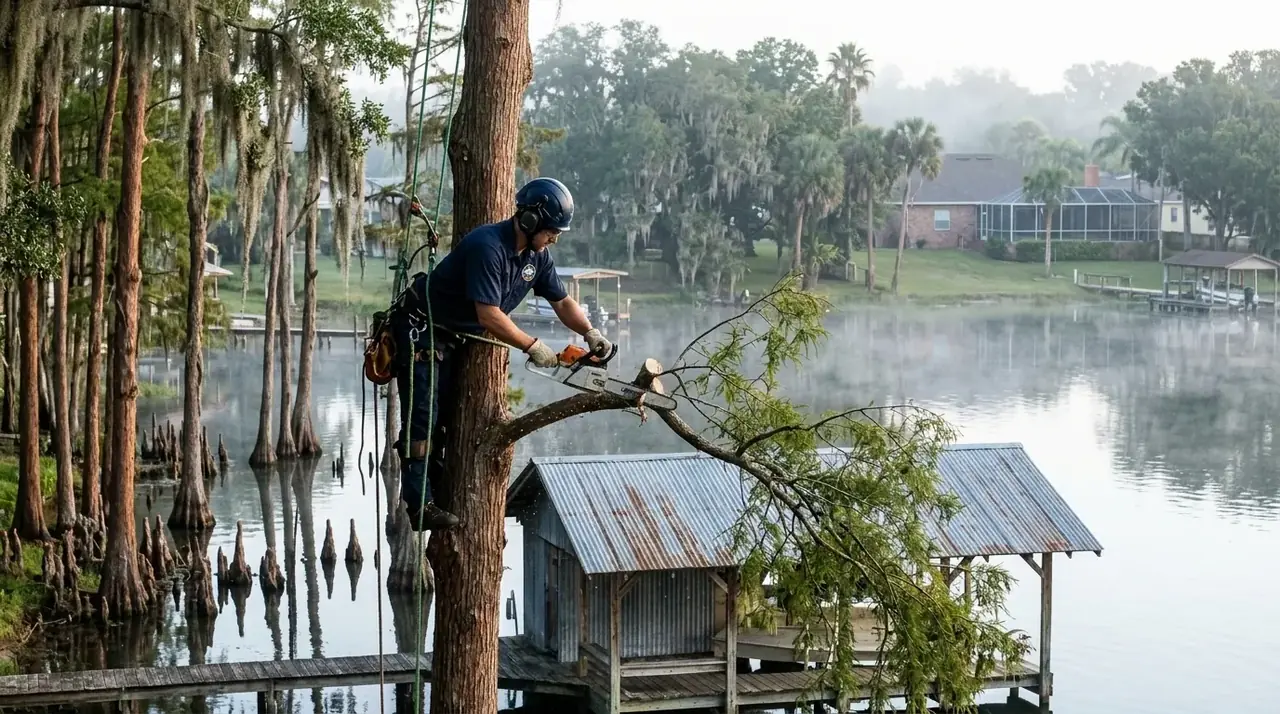
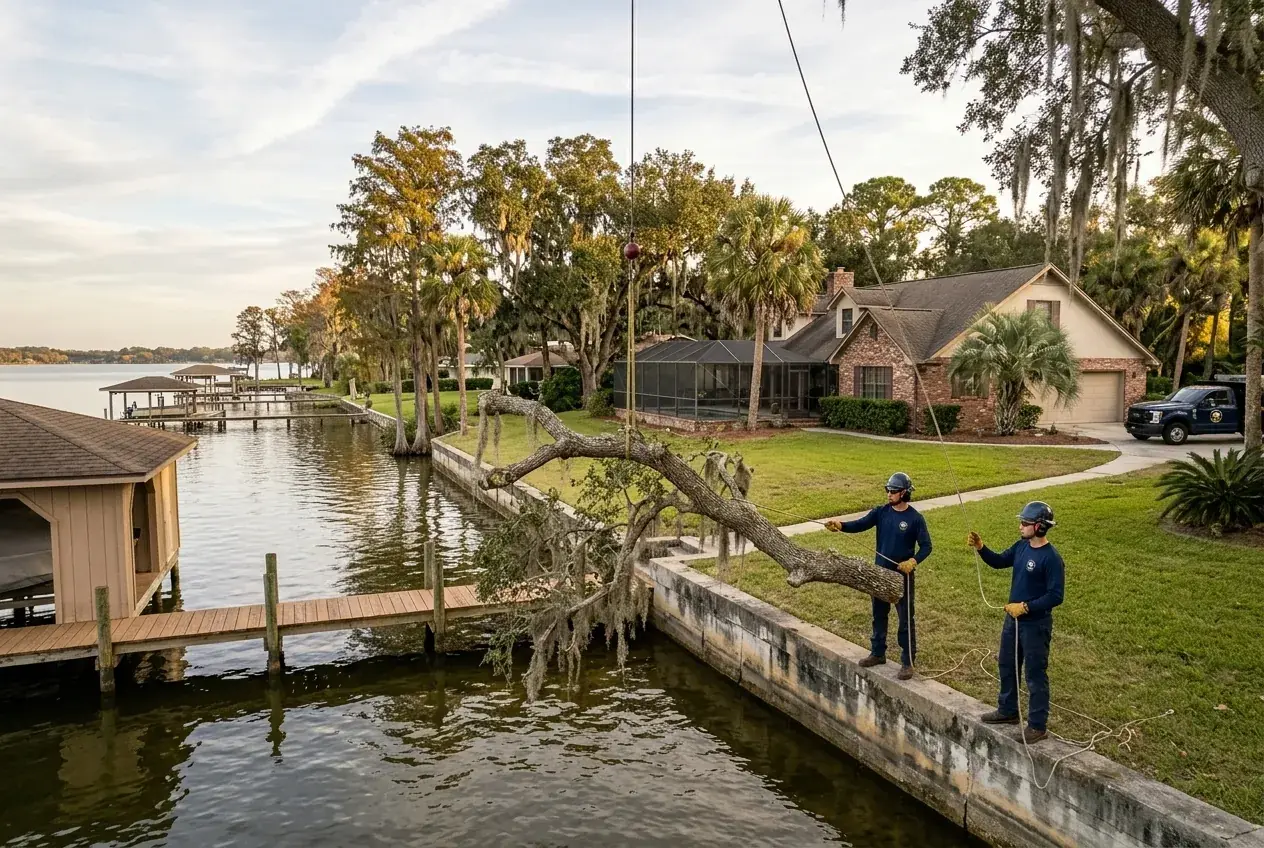
We work from land first. That usually means rigging from the tree itself, lowering limbs on ropes to the lawn or onto the dock decking, and hand-carrying brush up the slope to the chipper. We coordinate dock and seawall access with you before the job and protect decking with plywood where pieces land. When access truly requires it, such as a tree on a narrow point with no yard behind it, we arrange water-side support through a marine contractor rather than guess.
What Lakefront Tree Service Includes
- Pruning and removal of oaks, cypress and palms over docks, boathouses, lifts and seawalls
- Controlled rope lowering so limbs never free-fall toward the water
- Decking and seawall protection with plywood and padding
- Netting or skimming of small debris that lands in the water during work
- Removal of invasive Chinese tallow and camphor from upland areas of the shoreline
- A check of shoreline and aquatic plant rules before any work at the water's edge
Lakefront Tree Service Cost in Winter Haven, FL
Lakefront work usually adds 10 to 30 percent to the normal price for the same tree. The extra covers longer hand-carry distances, more rigging, protecting docks and walls, and the slower pace needed to keep material out of the lake. The numbers below are typical for shoreline lots around the north and south chains.
| Job | Typical range | What moves the price |
|---|---|---|
| Pruning a bald cypress over a dock or boathouse | $300 – $900 | Tree height, limbs over roofs, rope lowering |
| Removing a medium oak above a seawall | $1,100 – $2,300 | Slope, hand-carry distance, seawall protection |
| Removing a large shoreline tree, 60 ft+ | $2,200 – $4,500+ | Rigging, crane access from the street, debris control |
| Chinese tallow or camphor removal on the bank | $325 – $1,100 | Number of stems, resprout follow-up |
| Palm trimming along the waterline | $95 – $285 per palm | Lift placement, dock access |
Lakefront Tree Care for Bald Cypress on the Chain of Lakes
Bald cypress are the signature tree of these lakes, and many shoreline lots have a few standing right at the water with knees poking up around them. They are strong, take flooding in stride, and rarely need much more than deadwood removal and some clearance over a dock or roof. We do not recommend removing healthy cypress at the waterline; they hold the bank, shade the shallows and handle storms well.
Live oaks and laurel oaks on the upland part of the lot are the trees that cause most problems. They grow out toward the light over the water, so their weight ends up leaning lakeward. On a sloped bank with soft, wet sand, that can lift the root plate in a storm. We look for cracked soil on the uphill side, exposed roots and new lean. Sabal palms along the shore are tough and usually just need a yearly palm trimming.
Invasive Tallow and Camphor on the Shoreline
Chinese tallow and camphor are both listed as invasive in Florida, and both spread readily along lake edges and canal banks. Tallow in particular seeds heavily into wet ground. We cut and remove them from upland areas, grind stumps where it will not undermine the bank, and suggest follow-up treatment of resprouts by a licensed applicator. Anything growing in the water itself falls under aquatic plant rules, which we cover next.
Docks, Boat Lifts and Shore Power
Docks here often carry more than people realize: boat lifts with motors, shore power, lights, cleats and storage boxes. Roots from big shoreline trees can also lift dock footers and press against seawall panels over time. During the estimate we look at how close each tree sits to those structures and whether roots are causing trouble. Sometimes the answer is pruning; sometimes it is taking a tree down before its roots do more damage.
Lakefront Tree Rules in Winter Haven: Shoreline Permits
Lakefront work sits under several layers of rules, and they change depending on whether a plant is on dry land or in the water. In general, removing or altering aquatic plants in Florida waters requires a permit from the Florida Fish and Wildlife Conservation Commission unless the work fits an exemption. The City of Winter Haven's Natural Resources Division notes that homeowners may mechanically clear up to 50 feet or 50 percent of their shoreline, whichever is less, to open water without a permit. That exemption is written around shoreline plants, not mature trees. Upland trees on your lot fall under the city or county tree rules, and building a sandy beach or filling the shoreline can require state and Southwest Florida Water Management District permits. We confirm what applies before touching anything at the water's edge. Our blog post on trees and shorelines on the Chain of Lakes explains the basics.
Erosion, Seawalls and Root Plates
Trees help hold a lake bank together, so removing one can leave the slope open to erosion. When we take a shoreline tree down, we often leave the stump and deep roots in place or grind only the top, especially near a seawall where grinding could leave voids behind the wall. Heavy equipment stays well back from seawall caps, which are not built for crane outriggers or loaded trucks. For stumps elsewhere on the lot, our standard stump grinding applies.
Lakefront Tree Work in Winter Haven: When to Wait
High water after a wet summer or a hurricane makes shoreline banks soft and unstable, and equipment on soaked ground can do real damage. Unless a tree is an immediate hazard, we would rather wait until levels drop. We also advise against removing healthy cypress for a better view; selective pruning to open sight lines is cheaper, safer for the bank and usually allowed. If a tree is actively failing toward your home or dock, emergency tree removal is the right call instead.
Lakefront Job Timeline
Most lakefront pruning jobs take half a day to a full day. Removals on waterfront lots typically take one to two days because of rigging and hand-carry. If a permit check or water-side support is needed, add a week or two for scheduling. We start early, before afternoon storms build over the lakes, and finish with the dock, wall and lawn cleaned.
Seasonal owners on the lakes are often out of town when work needs doing. We can walk the property with a caretaker or neighbor, send photos and a written price, and finish the job before you get back.
Lakefront Tree Service on the North and South Chains
We work on waterfront lots across both chains: Lake Howard, Lake Shipp, Lake May and Lake Lulu on the south Chain of Lakes, Lake Haines, Lake Conine and Lake Smart on the north chain, the shore of Lake Eloise in Eloise and lake lots near Cypress Gardens. To plan your shoreline job, ask for a lakefront estimate.
Questions
Winter Haven Lakefront Tree Service: Common Questions
Waterfront lots usually mean a sloped yard, no truck access near the tree, limbs over docks or boathouses, and the need to keep every cut out of the lake. That takes more rigging, more hand-carrying and a slower pace. Lakefront jobs typically run 10 to 30 percent above the price for the same tree on a regular lot.
It depends where the tree sits and what kind it is. Upland trees on your lot fall under City of Winter Haven or Polk County tree rules. Plants growing in the water or at the water's edge can fall under FWC aquatic plant rules and, for filling or beach work, state and water management district permits. We confirm the rules for your shoreline before any work starts.
We usually recommend selective pruning instead. Bald cypress at the waterline hold the bank, are tough in storms, and may be covered by shoreline rules. Removing lower limbs and thinning a few branches can open your view a lot without the risks and permit questions of removal. If a cypress is dead, damaged or hazardous, removal is a different discussion.
We lower limbs on ropes instead of dropping them, aim drop zones at the lawn or protected dock decking, and keep cuts small over the water. Small twigs and leaves that do fall in are netted or skimmed out as we go. On big removals we may stage pieces on the dock and carry them up to the chipper by hand.
We work from land on almost every job. When access truly requires it, such as a tree on a narrow point with no yard behind it, we arrange water-side support through a marine contractor and include that in the written price. We will tell you during the estimate if your job needs it, so there are no surprises.
It can. Roots help hold the bank, and removing a tree on a slope exposes soil to rain and wave action. We often leave the stump and deep roots in place, grind only the surface, or suggest replanting with native shoreline plants. Near seawalls we avoid deep grinding that could leave voids behind the wall.
Yes. Chinese tallow is listed as invasive in Florida and spreads quickly along wet edges and canal banks, crowding out native plants. It seeds heavily and resprouts after cutting. We remove it from upland areas and recommend follow-up treatment of sprouts by a licensed applicator. Tallow growing in the water itself is an aquatic plant issue with its own permit rules.
Yes, and it is one of our most common lakefront jobs. Limbs over a boathouse drop leaves into gutters, rub tin roofs in wind and can break through in a storm. We prune back to healthy side branches with good clearance, lower each piece on ropes, and protect the roof surface where needed. Palms over boathouses get the same careful handling.
We keep loaded trucks, cranes and outriggers well back from seawall caps. Most residential seawalls are not designed for that kind of point load, and cracking a cap or tie-back is an expensive repair. Instead we rig from the tree, stage pieces on protected ground, and use compact equipment when the slope allows it.
Dry stretches with normal lake levels are best, usually in the cooler months from late fall through spring. Soft banks after a wet summer or a hurricane can rut and slump under equipment. Hazard trees do not wait for good weather, but routine pruning and planned removals go better, and cost less, when the ground is firm.
Related
Other Winter Haven Tree Services
Tree work on the lake?
We plan around the dock, the seawall and the water before anything gets cut.
Mon–Sat 7:00am–7:00pm (24/7 emergency line for storm work) · Licensed & insured