
Winter Haven · Polk County, FL
Land and Lot Clearing Around Winter Haven
Overgrown lots, old grove rows and brushy acreage cleared for a house pad, a fence line or simple usable yard. We check permits, wetlands and gopher tortoise burrows before any machine moves.
Land Clearing in Winter Haven Starts With What You Want to Keep
Most clearing jobs here are not bare-dirt jobs. A homeowner wants the back half of a deep lot opened up but the big live oaks left. A buyer of an old grove parcel wants the dead citrus rows gone so the land can be seen and surveyed. A church wants a strip of brush and vines cleared along a fence. We start by walking the property with you and flagging what stays, then price the rest by the method that fits.
We handle light and moderate clearing: brush, vines, small and medium trees, dead citrus, and invasive thickets like Brazilian pepper, camphor and Chinese tallow. For big commercial site work that needs grading and engineered drainage, you will want a site-work contractor; we can still remove the larger trees ahead of them.
Brazilian pepper deserves a special mention. It is one of the most widespread invasive plants in Florida and forms dense thickets that shade out everything beneath them. On overgrown lots near the lakes, clearing it is often the biggest part of the job.
What Land Clearing Includes
- A walk-through to flag trees, fences, wells and anything else that must be protected
- A check of city or county clearing rules before work, confirmed for your parcel
- A look for gopher tortoise burrows and wet areas that change the plan
- Brush and small-tree removal by forestry mulching or cut-and-haul
- Selective removal of larger trees and stump grinding where needed
- Leaving mulch spread in place or hauling everything off, depending on your goals
Before the walk-through, it helps to gather what you already have: a survey, a site plan, any letters from the city or county, and a rough idea of what the cleared ground is for. With those in hand, we can flag trees and buffers in the right places the first time.
Lot Clearing Cost in Winter Haven, FL
Light clearing usually runs $1,800 to $6,500 or more per acre, and small residential lots are priced as a job rather than by the acre. Density is the biggest factor: a pasture with scattered brush is quick, while a lot thick with Brazilian pepper and vines can take several times as long. Large trees, haul-off and stump work all add to the total.
| Job | Typical range | What moves the price |
|---|---|---|
| Light brush and undergrowth, per acre | $1,800 – $3,500 | Brush density, terrain, mulch vs. haul |
| Moderate clearing with small trees, per acre | $3,500 – $6,500+ | Tree count and size, invasive thickets |
| Old citrus grove rows, per acre | $2,500 – $6,000 | Number of trees, old irrigation lines, stump grinding |
| Residential lot or backyard section | $900 – $3,500 | Square footage, access, trees kept |
| Large tree removal within a clearing job | $850 – $3,600+ each | Height, what is nearby, crane need |
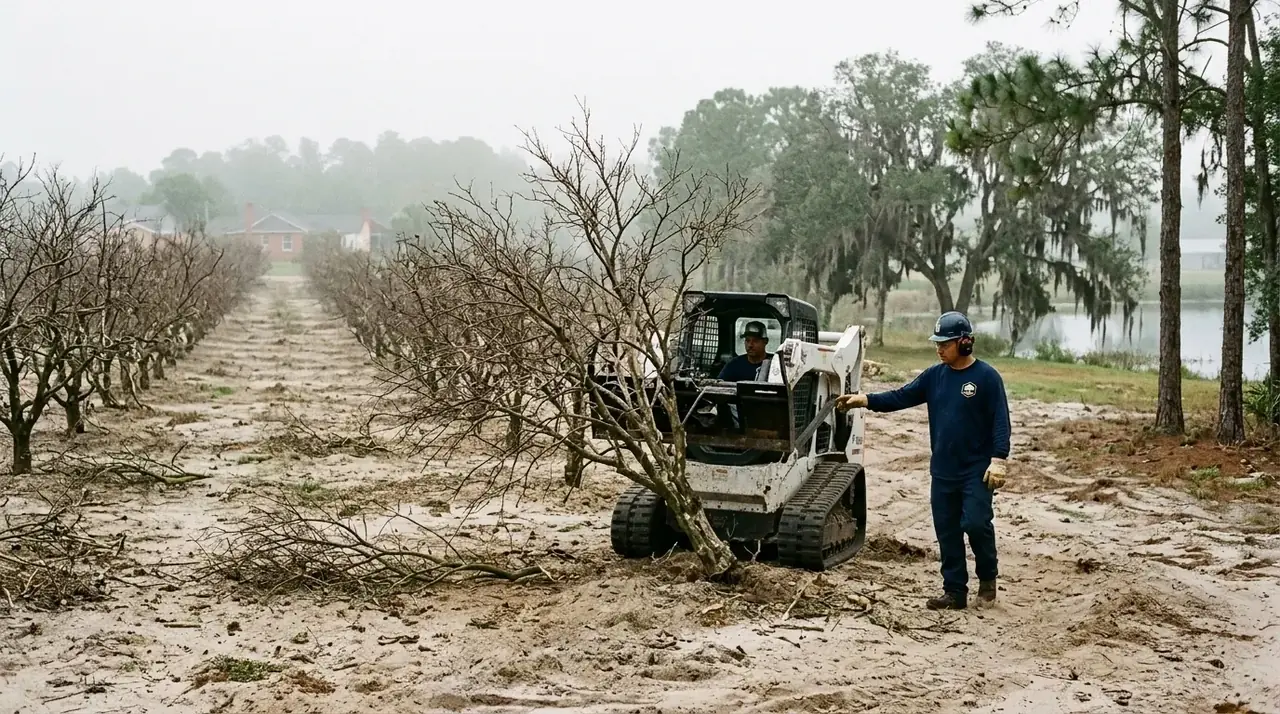
Clearing Methods: Mulching, Cut-and-Haul or Both
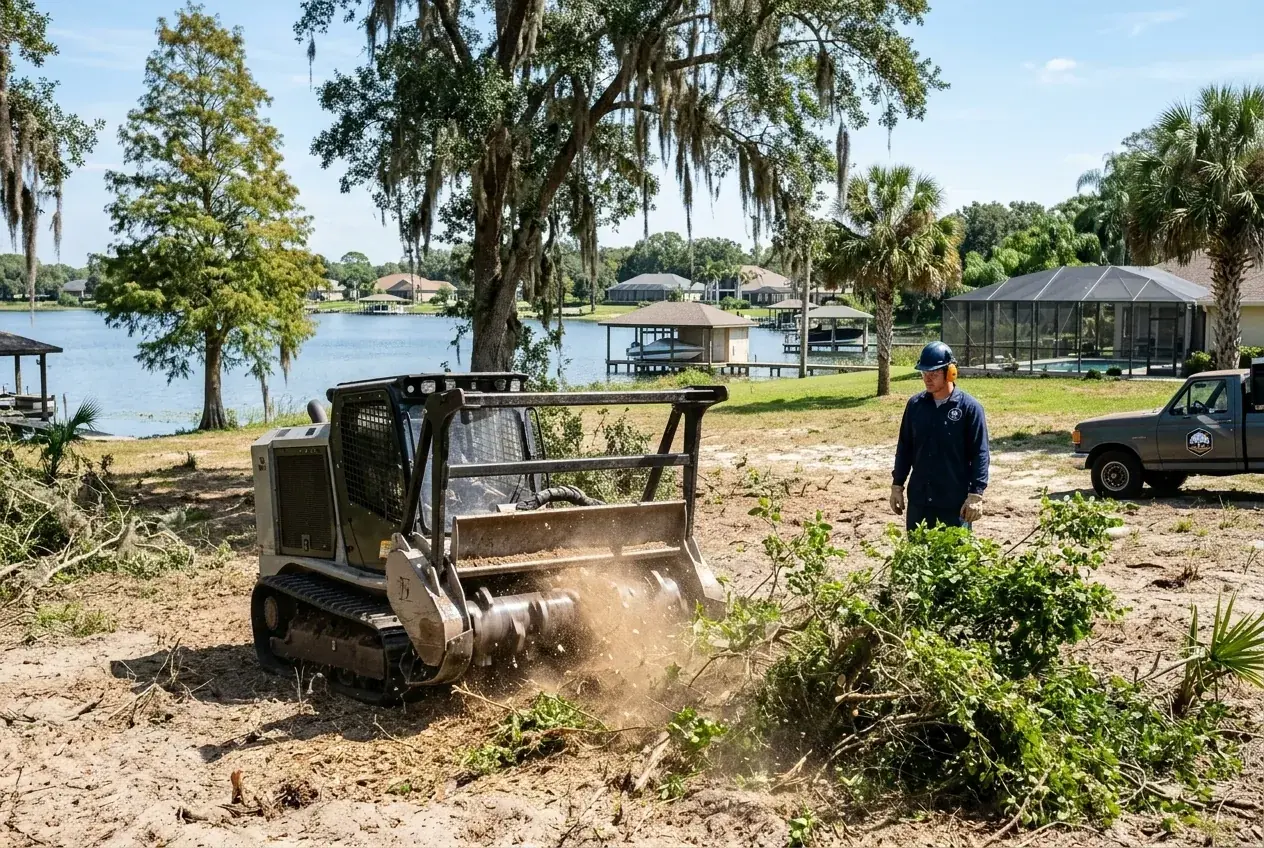
Mulching grinds brush and small trees where they stand and leaves a layer behind that holds sandy soil and slows weeds. Cut-and-haul removes everything and leaves bare ground, which is what a builder usually wants. Many jobs mix the two, mulching across the back of the lot and hauling near the future house pad. We recommend a method on the estimate and explain the reasoning.
Land Clearing for Old Grove Parcels Near Winter Haven
Winter Haven grew up on citrus, and plenty of parcels around town still hold the remains: rows of dead or declining trees, rusted micro-jet lines, and old wellheads. Citrus greening, a bacterial disease that has spread through Florida's commercial groves, is a big reason many of those trees were abandoned. Clearing old grove rows is straightforward work, but buried irrigation lines and risers can damage equipment and need to be found first. Our post on what to do with old citrus trees covers backyard grove remnants too.
Once grove rows are gone, the sandy ground is often a good fit for a home site, pasture or a few replanted shade trees. Healthy native oaks and pines along the edges can stay as a natural buffer if you want one.
Gopher Tortoises on Sandy Lots
The well-drained sand that made this area good for citrus is also prime gopher tortoise habitat, and burrows are common on vacant lots. The Florida Fish and Wildlife Conservation Commission requires a permit to relocate tortoises before land clearing within 25 feet of a potentially occupied burrow, and relocation is done by FWC-authorized agents, not by a tree crew. If we see burrows, we either keep all work at least 25 feet away or pause until you have the right permit in place. Routine yard maintenance that does not disturb burrows generally does not need one. The burrows shelter many other animals as well, which is part of why the rules are taken seriously.
Wetlands, Lakes and Clearing Rules
Many lots around the Chain of Lakes include low spots, wet edges or shoreline. Clearing or filling in wetlands can require an Environmental Resource Permit through the Southwest Florida Water Management District or the Florida Department of Environmental Protection, and shoreline vegetation has its own rules. Inside city limits, the City of Winter Haven has tree and land development rules of its own, and unincorporated parcels fall under Polk County. We confirm with the right agency on every estimate and do not clear wet areas without the paperwork. For shoreline lots, see our lakefront tree service and our guide to tree permits in Winter Haven.
Clearing for Fences, Paths and Defensible Space
Not every clearing job is about building. Some owners need a clean strip along a boundary so a surveyor or fence crew can work, a path to the back of a deep lot, or open space between thick brush and the house. These smaller jobs are priced by the job or by the linear foot. On lots where brush crowds the buildings, opening some space also cuts down on fuel that dries out during the spring dry season.
When Land Clearing Around Winter Haven Should Wait
If you are buying land, wait on clearing until the survey, any environmental review and the permits are done; clearing first can create a violation that costs more than the work. If you are building, let your builder or engineer show where the pad, driveway and septic system will sit before we touch trees, so you do not lose a good oak to a guess. And if a large part of the parcel is wet, the answer may be to clear only the high ground and leave the rest.
Clearing in the rainy season, roughly June through September, is possible but slower. Afternoon storms soften the ground, and machines on wet sand leave deep ruts that cost money to fix. When the schedule allows, we push big clearing jobs into the drier months.
Timeline for a Clearing Job
Once the checks are done, a residential lot usually takes one to two days. An acre of moderate brush typically takes two to four days depending on density and whether debris is hauled. Old grove clearing moves fast once irrigation lines are found. We schedule clearing during dry stretches when possible, since equipment on wet sand can rut badly.
After clearing, bare sand can wash in heavy rain, especially on lots that slope toward a lake or a ditch. Leaving a strip of vegetation along the low side, spreading mulch, or seeding quickly keeps soil where it belongs. We will point out spots that need attention before we pack up.
Lot Clearing in Eloise, Wahneta and Nearby Areas
We clear land in and around Winter Haven, including parcels near Eloise and Wahneta, brushy back lots in Jan Phyl Village, and lake-adjacent property in Cypress Gardens. When you are ready to walk the land with us, request a clearing estimate and tell us what you plan to build or plant.
Questions
Winter Haven Land Clearing: Common Questions
Light clearing usually runs $1,800 to $6,500 or more per acre. Open land with scattered brush is at the low end. Dense thickets of Brazilian pepper, vines and small trees, or old grove rows with buried irrigation, cost more. Large trees, stump grinding and hauling debris away add to the total. Smaller residential lots are usually priced as a single job.
Often, yes, especially before building. The City of Winter Haven and Polk County each have their own land development and tree rules, and clearing in wetlands can require state or water management district permits. Requirements depend on the parcel, its zoning and what you plan to do. We check with the right office for your property on every estimate and tell you what we find.
Gopher tortoises are protected in Florida. If clearing would come within 25 feet of a potentially occupied burrow, FWC requires a relocation permit first, and an FWC-authorized agent handles the tortoises. If burrows can be avoided by 25 feet in every direction, a permit may not be needed. We look for burrows during the walk-through and plan around them.
Yes, and we recommend it. Mature live oaks add value and shade, and they are hard to replace. We flag the trees you want to keep, keep heavy equipment off their root zones as much as possible, and clear brush around them by hand or with smaller machines. If a kept tree has damage or decay, we will point it out so you can decide.
Forestry mulching uses a machine with a spinning drum that grinds brush and small trees in place, leaving a layer of mulch on the ground. It is fast, avoids hauling, and the mulch helps hold sandy soil and slow weeds. It is not ideal when you need bare ground for building, since the mulch layer would have to be removed later.
Yes. We remove dead and declining citrus rows, grind or pull the stumps, and clear the brush that has grown up between them. Old groves often hide micro-jet lines, risers and well casings, so we walk the rows first to locate them. If any trees are still healthy and you want to keep a few, we can leave those in place.
We are careful near water. Shoreline vegetation is regulated, wetlands may need permits, and plants along the bank help hold soil in place. In most cases we clear the upland part of a lake lot and leave a vegetated buffer at the water. Any shoreline work is planned with the right agency first, and we keep cuttings and debris out of the lake.
No. We mulch it in place or chip and haul it off. Burning requires state authorization, has setback rules, and creates smoke that is a real problem in neighborhoods. Hauling costs a bit more, but it is cleaner and avoids complaints. Mulch left on site breaks down and improves sandy soil over time.
An acre of light brush can often be cleared in a day or two. Moderate clearing with small trees and invasive thickets usually takes two to four days, depending on density and whether debris is hauled away. Permits, tortoise surveys or wet weather can push the start date back, so it is smart to plan a few weeks ahead.
Yes. Brazilian pepper, camphor and Chinese tallow are among the most common invasive trees on overgrown lots around Winter Haven. We cut and remove them and grind stumps where practical. Many invasives resprout from roots, so a follow-up treatment by a licensed applicator is often needed to keep them from coming back. We can point you to the right next step.
Related
Other Winter Haven Tree Services
Clearing land near Winter Haven?
Walk it with us and get a per-acre price that lists exactly what is included.
Mon–Sat 7:00am–7:00pm (24/7 emergency line for storm work) · Licensed & insured