
Around Winter Haven, homes on city sewer and homes on septic often sit only a few streets apart. The city limits, Polk County's unincorporated communities and the age of each neighborhood decide which one you have. Either way, tree roots can cause expensive trouble, and the fixes overlap more than people expect.
How Tree Roots Find Septic Tanks and Sewer Lines in Polk County
Tree roots grow where water, air and nutrients are available, and they stop growing where those run out. Our sandy soils drain fast and dry out between rains, so a slow leak from a cracked pipe or a loose joint becomes a steady water source in otherwise dry ground. Fine roots follow the moisture to the crack, slip in and branch out inside the pipe, where they catch solids and grow thicker each year.
Sound, sealed pipe resists roots far better than old or damaged pipe. Clay tile, older joints and pipes shifted by settling are the usual entry points. A septic drain field is a different case. Its lines are designed to release water into the soil, which makes the area around them a natural magnet for roots.
Signs roots are in your lines
- Slow drains or gurgling toilets throughout the house, not just one fixture.
- Sewage odors in the yard or wet, spongy patches over the drain field.
- Unusually lush green stripes in the lawn over the field in dry weather.
- Backups that return a few months after a line is cleared.
A plumber's camera inspection is the surest way to know. If the camera shows roots, the next question is which tree they belong to and whether that tree should stay.
Tree Roots and Septic Drain Fields Around Winter Haven
UF/IFAS Extension's guide Landscaping on or near Septic Drain Fields (SL474) is the best local reference we have found. Its key points:
- Avoid planting trees or shrubs of any kind on or near the drain field.
- Tree roots can spread two to three times the width of the canopy. A tree about 30 feet wide growing within 20 feet of the drain field is a likely cause of system failure.
- Plants with large, deep, tap or woody roots can grow into the pipes and cause backups.
- Turfgrass such as St. Augustine, bahia, zoysia or bermudagrass is the simplest cover over a field.
- Keep irrigation water at least 10 feet from the drain field, and avoid digging deeper than 6 inches over it.
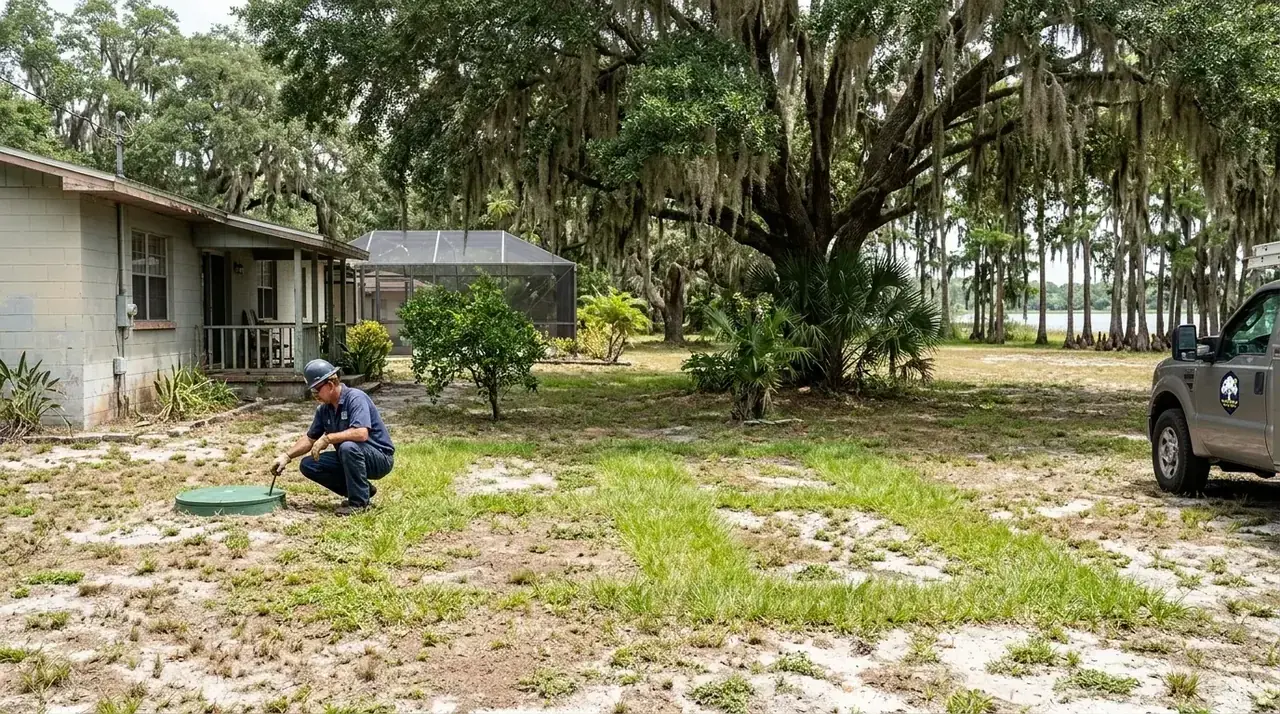
A separate UF/IFAS recommendation gives a simple planting rule of thumb: estimate the tree's mature canopy diameter and plant at least that far from the septic tank or drain field. For a live oak, that can mean a lot of distance, which is why small native trees often make more sense on a septic lot.
Florida Septic Setback Rules That Shape Tree Planting
Florida's onsite sewage rules, now in Florida Administrative Code Chapter 62-6 under the Department of Environmental Protection, set how far a septic system must sit from certain features. Under Rule 62-6.005, a system generally must be at least 75 feet from a private drinking water well, 75 feet laterally from the boundaries of surface water bodies, and 5 feet from building foundations and property lines. Public wells carry larger setbacks.
The rule does not set any distance between a septic system and a tree. Spacing trees from the field is a landscaping decision, guided by the UF/IFAS advice above. The surface water setback matters on lakefront lots, though, because it pushes the drain field toward the street side of the property, often right where homeowners want to plant shade trees.
| Item | Guidance |
|---|---|
| Septic system to private well | 75 feet (Rule 62-6.005) |
| Septic system to surface water body | 75 feet laterally (Rule 62-6.005) |
| Septic system to foundation or property line | 5 feet (Rule 62-6.005) |
| Tree to tank or drain field | At least the tree's mature canopy width (UF/IFAS) |
| Irrigation spray to drain field | At least 10 feet (UF/IFAS) |
Trees to Keep Away From Polk County Septic and Sewer Lines
Any tree can send roots into a leaking pipe, but some make trouble faster. The usual offenders around Winter Haven tend to be fast-growing, water-loving trees with big root systems: willows near the lakes, ficus, camphor, laurel oak and water oak. UF/IFAS also warns against bamboo and pampas grass near a drain field because of their deep, spreading roots.
Better choices near a septic lot are small, slow-growing trees placed well outside the drain field, or shrubs and groundcovers on the edges. The UF/IFAS septic guide lists herbaceous options like pink muhly grass, plumbago, milkweed and agapanthus for areas near the field. For shade elsewhere on the lot, our guide to the best shade trees for Winter Haven yards covers wind-resistant natives and how to size them.
Root Barriers and Root Pruning Near Winter Haven Sewer Lines
When a valuable tree sits near a sewer line, removal is not the only option. Root pruning cuts the roots along a trench line, and a root barrier, a rigid panel set vertically in the soil, steers new roots deeper or away from the pipe. Barriers work best when installed before roots reach the line, and they do not stop roots that are already inside a pipe.
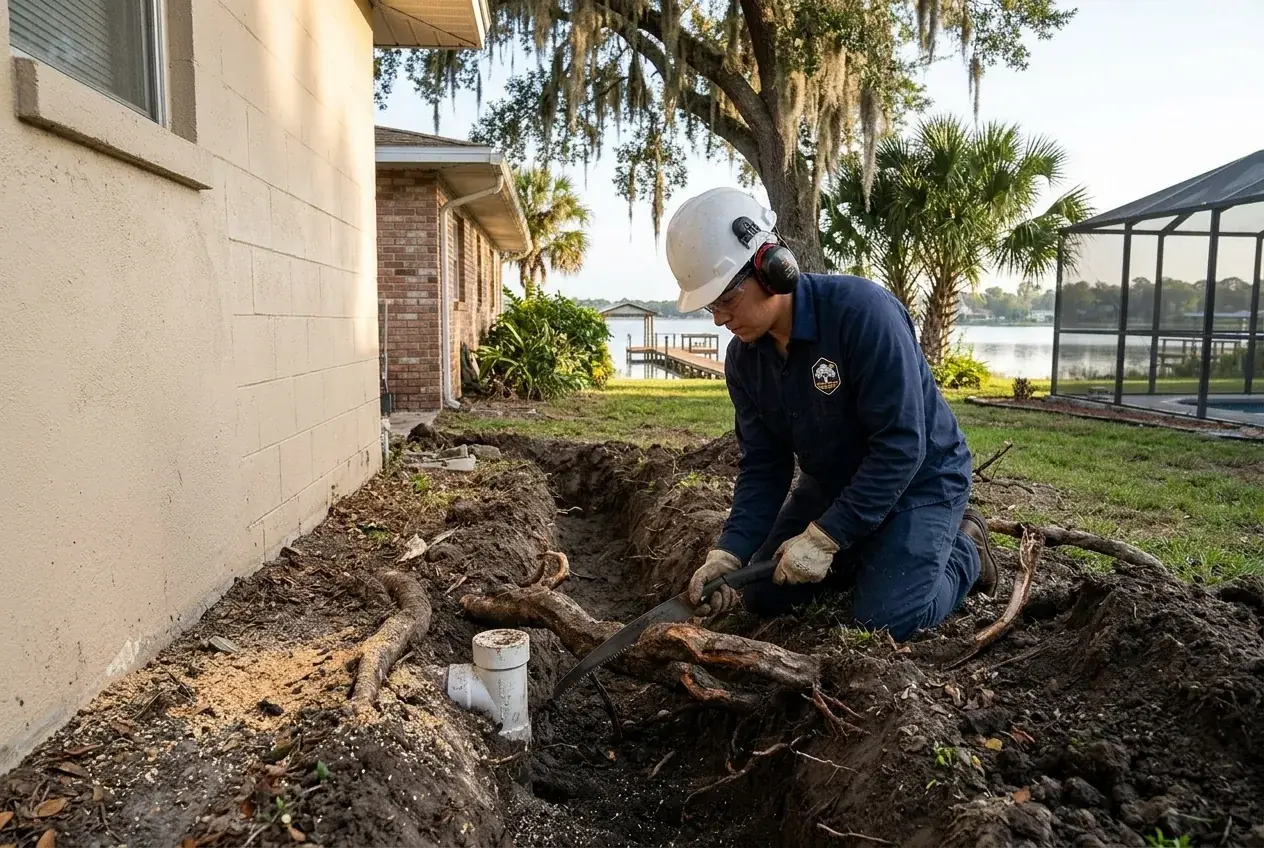
Root pruning has limits. Cutting large structural roots close to the trunk can leave a tree unstable. UF/IFAS hurricane research advises never cutting roots closer to the trunk than five times the trunk diameter. Ignore that and a tree that was blocking your drain can end up on your roof. That is a real Winter Haven lesson. After Hurricane Ian, the city reported five water main breaks, mostly from wind-toppled trees whose roots broke pipes as they lifted, according to The Ledger. Our tree risk assessment looks at stability before we recommend cutting roots.
When to Remove a Tree Over a Septic or Sewer Line
Removal makes sense when a tree sits on the drain field, when roots have already damaged a line more than once, or when the root pruning needed to protect the pipe would leave the tree unsafe. Once a tree comes out, the roots stop growing and slowly decay, though roots already in a pipe still need to be cleared by a plumber.
Septic lots are common in the unincorporated communities around the city, including Wahneta and Inwood. On those jobs our tree removal crews keep heavy equipment off the drain field, lay plywood paths over soft ground and take the stump down with care. If the stump sits close to a line, we may recommend leaving it and letting it rot rather than grinding over the pipe. When grinding is safe, our stump grinding service finishes the job.
Working With Your Plumber or Septic Contractor
Root problems in pipes are a two-trade job. A plumber or septic contractor clears the line and tells you where the damage is. A tree crew deals with the tree that is feeding the problem. The handoff goes better when you have a few things ready:
- The camera inspection video or notes showing where roots entered and how deep the line runs.
- A rough sketch or survey showing the tank, distribution box and drain field.
- Which trees sit closest to the problem area, and roughly how far away they are.
- Any plans for repair, since a new drain field or replaced line may change which trees need to go.
With that information we can tell you whether root pruning, a barrier, removal or doing nothing is the right call for each tree. Sometimes the culprit is not the big oak everyone suspects but a volunteer shrub or a smaller tree growing much closer to the pipe.
Planning Ahead for Roots and Pipes in Polk County
The cheapest root problem is the one you avoid at planting time. Know where your lines run, give trees room based on their mature size, and keep the drain field in grass. If an old citrus or a volunteer oak is growing over the field, take it out while it is small. For more on what to plant in place of an old fruit tree, see our post on old citrus trees in Winter Haven.